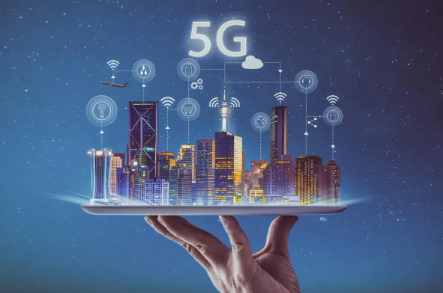
5G technology represents a significant evolution in mobile communication. It is built on a complex architecture that integrates user equipment, radio access networks, and core networks. Advanced methodologies, such as massive MIMO and beamforming, enhance signal efficiency and capacity. Furthermore, the implementation of network slicing allows for customized virtual networks. Understanding these components and their interactions reveals the underlying mechanisms that drive 5G’s transformative potential in connectivity. What implications does this hold for future technological advancements?
The Fundamentals of 5G Technology
5G technology represents a significant advancement in mobile communication, characterized by its enhanced capabilities over previous generations.
It introduces network slicing, enabling the creation of multiple virtual networks tailored to specific needs, thus optimizing resource allocation.
Additionally, edge computing facilitates data processing closer to the user, reducing latency and improving responsiveness.
Together, these innovations empower users with greater freedom and efficiency in connectivity.
Key Components of 5G Architecture
Three critical components define the architecture of 5G technology: the User Equipment (UE), the Radio Access Network (RAN), and the Core Network.
These elements facilitate advanced functionalities such as network slicing, enabling tailored connectivity solutions for diverse applications.
Additionally, edge computing enhances data processing efficiency by decentralizing resources, allowing for real-time responsiveness and minimizing latency, crucial for delivering the full potential of 5G networks.
Innovative Techniques Driving 5G Performance
As telecommunications evolve, innovative techniques are essential for enhancing the performance of next-generation networks.
Massive MIMO technology significantly increases capacity by utilizing numerous antennas, facilitating simultaneous connections.
Complementing this, advanced beamforming techniques direct signals towards specific users, minimizing interference and optimizing resource allocation.
Together, these innovations push the boundaries of network efficiency, ensuring robust connectivity in diverse environments, thus catering to the demand for freedom in communication.
See also: Green Technology Innovations
The Impact of 5G on Connectivity and Communication
While traditional networks often struggle with latency and limited capacity, the advent of 5G technology revolutionizes connectivity and communication.
This enhanced network facilitates the development of smart cities, enabling real-time data exchange and improved urban management.
Furthermore, 5G supports remote work by providing faster, more reliable connections, empowering individuals to collaborate seamlessly, thus fostering innovation and enhancing productivity in a globally connected environment.
Conclusion
In conclusion, 5G technology represents a paradigm shift in connectivity, offering speeds up to 100 times faster than 4G networks. With its advanced architecture, including massive MIMO and network slicing, it enables tailored connectivity solutions for various applications. As industries increasingly adopt 5G, the potential for enhanced user experiences and operational efficiencies becomes apparent. Notably, forecasts suggest that by 2025, there will be over 1.7 billion 5G connections globally, underscoring its transformative impact on communication.