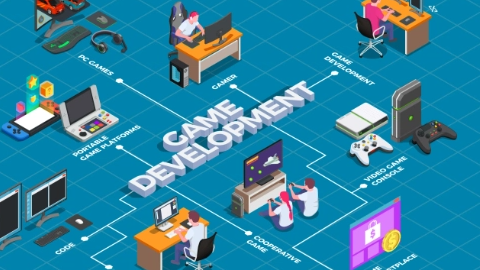
Game development basics involve a systematic approach to transforming ideas into interactive experiences. Understanding game concepts is crucial for creating engaging mechanics. Design principles guide player motivation and interaction. Meanwhile, programming fundamentals ensure functionality and smooth gameplay. Testing and iteration further refine the product, enhancing player engagement. These elements intertwine, presenting challenges and opportunities that developers must navigate. What complexities arise when attempting to harmonize these components?
Understanding Game Concepts
While many aspiring developers may believe that game design begins with graphics and code, a deeper understanding of fundamental game concepts is essential for creating engaging and immersive experiences.
Game mechanics serve as the backbone of gameplay, influencing player motivation and interaction. By mastering these elements, developers can create environments that not only entertain but also empower players, fostering a sense of agency and freedom.
Design Principles for Engaging Gameplay
Building on the understanding of fundamental game concepts, effective game design hinges on a set of core principles that shape engaging gameplay.
Central to this is player motivation, which drives exploration and challenges. Thoughtful level design enhances this experience, creating environments that encourage interaction and discovery.
Basics of Game Programming
Game programming encompasses a myriad of essential techniques and methodologies that transform creative ideas into functional digital experiences.
Central to this process are game loops, which manage the flow of gameplay by repeatedly updating and rendering game states.
Additionally, collision detection serves as a critical mechanism, determining interactions between game entities, enhancing immersion, and ensuring a responsive environment, pivotal for player engagement and freedom.
see also: francechevalturfvip
Testing and Iterating Your Game
Testing and iterating a game is a critical phase in the development process that ensures quality and player satisfaction.
Employing effective playtesting strategies allows developers to gather valuable insights, driving focused feedback incorporation. This adaptive approach fosters innovation, encouraging the exploration of new ideas while refining existing mechanics.
Ultimately, this cyclical process enhances gameplay, aligning the final product with player expectations and desires for freedom.
Conclusion
In the intricate dance of game development, one might ironically find that the true artistry lies not in the creation but in the relentless cycle of testing and refining. While developers toil to craft immersive worlds filled with engaging mechanics, it is the feedback loop—often deemed a tedious necessity—that ultimately shapes the player experience. Thus, the path to an unforgettable game is paved not with flawless execution but with the humble acceptance of imperfection and the willingness to evolve.